
Looking beyond a single wrinkle: assessing dermal fillers in Ras Al Khaimah
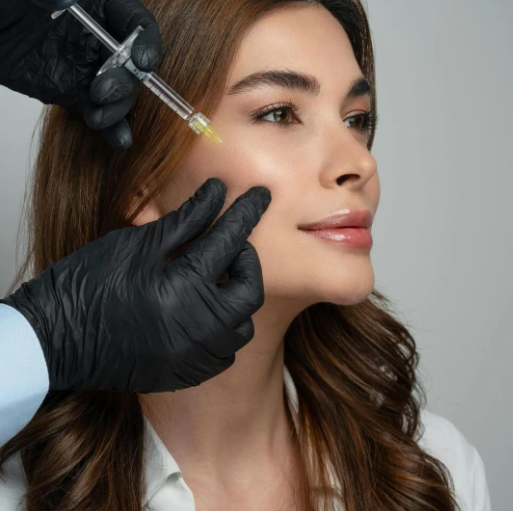
A patient may point to a crease beside the mouth and ask for it to be filled.
The visible line, however, is only part of the assessment: its appearance can reflect skin changes, movement and the structure of nearby tissues. For patients considering dermal fillers in Ras Al Khaimah, that distinction helps explain why a consultation may examine the whole face before discussing one area. At Alnoor Medical Center, the documented approach includes facial analysis, medical review and individual treatment planning. The relevant question is what a proposed injection can reasonably change without overlooking the features around it.
Why does a local concern require a wider assessment?
The face is a connected arrangement of skin, fat, muscles and supporting structures. A change in one component can affect the appearance of a neighbouring area, even when that area is where the patient first notices a difference. A visible fold is therefore not necessarily an isolated gap waiting to be filled. Understanding the surrounding anatomy helps define the problem, rather than allowing the most noticeable line to determine the entire plan.
A wider assessment does not automatically justify treating more areas. Its purpose is to establish whether a local injection is appropriate, whether another approach deserves consideration or whether the concern is unlikely to improve sufficiently with filler. A patient may still receive a limited recommendation after a full facial assessment. The scope of the examination and the scope of treatment are separate decisions, and the first should not be used as a reason to expand the second unnecessarily.
What should an assessment for dermal fillers in Ras Al Khaimah establish?
The starting point is the change the patient wants to discuss and its significance in everyday life. A concern about appearing tired is different from a request for a sharper contour, even if both are described as rejuvenation. The clinician needs to translate that description into a feature that can be examined. A defined goal makes the treatment proposal easier to evaluate, including what would count as a useful improvement and what lies beyond its limits.
Medical history then adds information that appearance alone cannot provide. Previous injections, facial surgery, allergies, medicines and earlier complications may influence the options. The identity and timing of previous filler can be relevant even when its effect no longer seems obvious to the patient. At Alnoor Medical Center, the documented emphasis on assessment and treatment planning provides a setting for connecting the patient’s request with clinical suitability, rather than assuming that a familiar procedure is automatically appropriate again.
How are volume loss, movement and loose skin distinguished?
A crease can have more than one contributor. Some features relate to a loss of fullness or support, while others become more prominent as muscles move. Skin quality and laxity can also influence the appearance of the same region. Examining the face at rest and during expression helps the clinician understand which components are relevant before recommending a material that adds volume.
These distinctions matter because filler does not address every mechanism in the same way. It can add fullness or modify selected contours, but it does not directly relax a muscle and cannot reproduce the repositioning achieved by surgery. Adding material to a concern driven mainly by substantial tissue laxity may produce an unsatisfactory result. The presence of a wrinkle does not establish an indication for filler, even when an injection might seem the simplest response to it.
Why do the cheeks and lower face need to be considered together?
The folds running from the nose towards the mouth are normal facial features that can become more noticeable over time. Their appearance may be influenced by nearby cheek tissues as well as changes within the fold itself. That relationship can be relevant to assessment, but it does not create a universal rule that every fold should be treated through the cheeks. An anatomical connection is a reason to examine, not a preset injection plan.
A similar principle applies when a patient focuses on the lower face. The chin, mouth and adjacent contours are assessed in relation to one another, with attention to existing proportions and movement. A photograph of another person’s profile cannot establish what would suit a different facial structure. Proportion is individual, and a meaningful proposal explains the intended change without treating a fashionable outline as a medical standard or a requirement for every face.
Does a comprehensive plan require more filler?
The amount of product should follow the treatment goal and clinical findings. A recommendation is not more complete simply because it involves a larger quantity or several areas. Some concerns may be approached conservatively, while others may lead to advice about an alternative. A clear rationale matters more than a predetermined volume, and uncertainty about suitability is a reason for further discussion rather than automatic escalation.
Product choice is also part of that reasoning. Fillers can differ in composition, physical properties and intended use, so a product selected for one purpose is not automatically suitable for another. The clinician should explain why the proposed material fits the planned area and what limitations remain. More product cannot guarantee greater satisfaction or eliminate asymmetry, and normal differences between the two sides of the face need to be recognised when expectations are discussed.
What should remain clear about risks and later decisions?
Facial filler injections are medical procedures with possible unwanted effects. Bruising, swelling and tenderness can occur, while infection, nodules and other complications may require assessment or treatment. Accidental interference with a blood vessel can cause serious injury, including tissue damage and, rarely, visual impairment. Detailed anatomical knowledge and appropriate technique reduce avoidable risks but cannot make treatment risk-free.
The plan should explain who will review concerns and how the response will be assessed. Unusual pain, pale or mottled skin, or an unexpected worsening reaction needs urgent clinical attention; sudden visual changes require immediate emergency care. Decisions about further treatment should then depend on examination and the patient’s goals, rather than a routine assumption that additional material is required. Follow-up is a point for reassessment, including the possibility that no further injection is appropriate.
A considered approach to dermal fillers in Ras Al Khaimah
A request to soften one line can be the beginning of a wider clinical discussion without becoming a proposal to treat the whole face. The assessment needs to distinguish the visible concern from its possible causes and match any recommendation to a defined goal. Filler has useful applications, but its limits are as relevant as its capacity to add volume. A coherent plan explains both the reason to treat and the reason to stop.
At Alnoor Medical Center, facial assessment and discussion of expectations are documented parts of injectable treatment planning. Their value lies in allowing a recommendation to remain specific to the patient rather than to a standard facial template. Looking beyond a single wrinkle should make the decision more precise, with the extent of treatment guided by anatomy, suitability and an informed understanding of the possible outcome.