
How Secure Access Service Edge Is Reshaping Digital Infrastructure
Key Takeaways
- SASE integrates networking and security functions into a unified, cloud-native service.
- It addresses challenges posed by remote work, cloud migration, and edge computing.
- Organizations benefit from improved security, reduced complexity, and enhanced performance.
As digital transformation accelerates across industries, organizations are seeking agile ways to protect sensitive data and optimize network performance. The emergence of Secure Access Service Edge (SASE) is revolutionizing how businesses build, secure, and scale their digital infrastructure. By integrating networking and comprehensive security features within a cloud-first framework, SASE enables secure connectivity for remote teams and distributed resources. Companies exploring strategies for modern network architecture should consider the robust capabilities provided by https://versa-networks.com/sase/, which exemplifies the SASE model’s potential.
Traditional hub-and-spoke networks often struggle to keep pace with the increasing number of remote users, cloud applications, and rapidly expanding attack surfaces. SASE offers a converged approach, ensuring that security is no longer bound to a physical perimeter but embedded directly within cloud-delivered network traffic. Its architecture brings agility, scalability, and consistent policy enforcement, regardless of user location or device.
Beyond enhanced access control, SASE fosters a culture of proactive risk management and operational efficiency. As more workloads migrate to the cloud and more users work remotely, its unified service delivery ensures consistent protection and optimal performance for all digital assets. Organizations seeking to remain resilient must understand how SASE addresses today’s most pressing business connectivity and security challenges.
In this article, you’ll discover key drivers, practical benefits, adoption challenges, and the future outlook of SASE. By understanding its transformative value, companies can make informed decisions that will secure and accelerate their ongoing digital transformation journey.
Understanding SASE
Secure Access Service Edge represents a holistic approach to networking and security by merging wide area networking (WAN) capabilities with comprehensive security services—including Secure Web Gateways (SWG), Cloud Access Security Brokers (CASB), Firewall as a Service (FWaaS), and Zero Trust Network Access (ZTNA). This convergence allows organizations to manage access risks and traffic more efficiently, delivering security directly where data and applications reside—at the cloud edge.
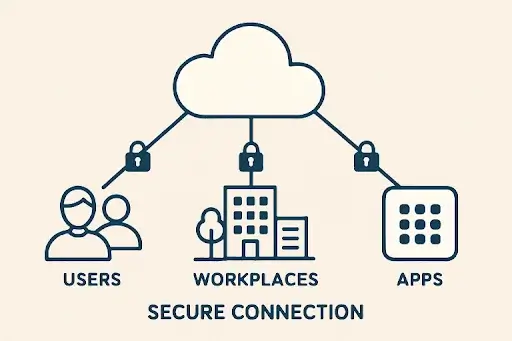
One of the essential features of SASE is its cloud-native delivery. Unlike traditional hardware-based security appliances, SASEs’ as-a-service model supports distributed workforces and diverse endpoints without the need for complex on-premises deployments. This flexibility is crucial as businesses continue to support an increasingly mobile workforce and adopt cloud-hosted business applications. According to IBM, the unification of networking and security enables IT teams to eliminate overlapping functionality and reduce administrative overhead.
Drivers of SASE Adoption
Several trends have accelerated the transition toward SASE. The sudden growth of remote work during the COVID-19 pandemic exposed the limitations of conventional perimeter-based security models. Meanwhile, the accelerated migration to cloud infrastructure and software-as-a-service (SaaS) platforms created new requirements for dynamic access control and network visibility.
These changes require businesses to adopt solutions that can adapt to shifting traffic patterns, protect endpoints across diverse locations, and scale efficiently as needs grow. SASE addresses these demands with its policy-driven, cloud-native platform, which integrates security and network management into a single pane of glass. More organizations are recognizing that a unified service edge is essential for protecting digital assets without compromising user experience or business continuity.
Benefits of Implementing SASE
- Enhanced Security: With security functions embedded directly in the cloud service, SASE enforces policies and offers consistent threat protection across offices, home users, and cloud applications. Its zero-trust framework reduces the likelihood of lateral threats and data breaches.
- Improved Performance: By connecting users to cloud resources locally, rather than routing traffic through centralized data centers, SASE significantly reduces latency and enhances application responsiveness.
- Operational Efficiency: IT teams gain visibility and control through a unified platform, reducing the need to manage disparate point solutions and complex network configurations. This consolidation can drive down operational costs and improve compliance auditing.
For many organizations, the transition to SASE not only safeguards data but also accelerates digital adoption and business agility. Additional research by Gartner projects that by 2028, 70% of SD-WAN purchases will be part of a single-vendor SASE platform offering, up from 25% in 2025.
Real-World Applications
Organizations across sectors—from financial services and healthcare to manufacturing and retail—are implementing SASE to consolidate security and network solutions while enabling seamless remote access. A 2023 industry case study revealed that a multinational manufacturer using SASE observed a 50% reduction in security incidents and a 35% increase in VPN-less user productivity within the first year of deployment.
By leveraging cloud-native policy management, enterprises can enforce granular controls for remote workers, secure sensitive data in transit and at rest, and enhance regulatory compliance. As a result, SASE provides not just a technology shift but a competitive advantage for digital-first companies.
Challenges and Considerations
While SASE delivers substantial benefits, successful implementation requires careful planning and execution. Key considerations include integration with existing on-premises network infrastructure, avoiding vendor lock-in, and investing in upskilling IT staff for cloud-centric environments. Organizations may also face challenges when migrating legacy applications or aligning enterprise risk management practices with the zero-trust principles of SASE.
A phased adoption, pilot projects, and a clear understanding of the total cost of ownership can help smooth the transition. Engaging experienced partners and solution providers is crucial for integration and ongoing support.
Future Outlook
As businesses grow more reliant on remote collaboration and digital business ecosystems, the adoption of SASE is poised to accelerate. Analysts forecast that the SASE market will continue to expand as enterprises prioritize secure, agile, and integrated approaches to networking and cybersecurity. This evolution highlights the importance of organizations staying informed and continually modernizing their infrastructure, leveraging SASE to remain resilient in the face of increasing cyber threats.
Organizations that invest in SASE today position themselves for future growth and innovation, ensuring secure access for every user, device, and location within their digital enterprise landscape.
Conclusion
Secure Access Service Edge stands at the forefront of next-generation digital infrastructure, addressing today’s top security and networking concerns with an integrated, cloud-delivered solution. Through holistic policy enforcement, streamlined management, and adaptable connectivity, SASE empowers organizations to stay one step ahead in a rapidly changing digital world. You can visit influencergonewild for more trending posts.