
Optimizing Efficiency: The Role of Commercial Elevators in Retail Buildings
Retail spaces are characterized by the constant, dynamic movement of people and goods. Commercial elevators serve as essential machinery in these retail environments, functioning as the critical infrastructure that manages the complex flow of diverse user groups, including shoppers carrying purchases, parents with strollers, elderly customers requiring accessibility support, delivery personnel transporting merchandise, and maintenance staff moving equipment, ensuring there is no congestion at any time and that traffic flows optimally across multiple floors.
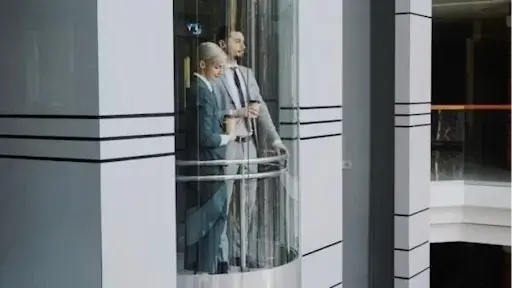
In retail buildings where every square foot translates directly to revenue potential, which is why Commercial elevators in these buildings are usually machine-room-less and feature a sleek design. Installing these types of elevators in commercial buildings helps save space, allowing them to use as much space as possible for additional retail, storage areas, or building services.
Role of commercial elevators in retail buildings
In commercial buildings, monospace elevators serve many purposes. The primary role of commercial elevators is to enable the movement of people and goods between levels. commercial elevators have the following roles in retail buildings:
- Enhance mobility and accessibility
In retail buildings, commercial elevators help to reliably transport people and goods between floors. These elevators are designed in such a manner that they can be comfortably accessed and operated by everyone.
- Improve safety
Commercial elevators have many safety and security features that help them operate without disruptions. In addition, commercial elevators have remote monitoring integrated into them, which can predict when they require repair. Further, this helps repair elevators promptly, preventing breakdowns.
- Increase efficiency
Commercial elevators improve efficiency in retail buildings. They function smoothly and quickly, helping reduce wait times. This helps avoid congestion and manage the flow of people and goods in an optimal manner.
- Reduce carbon footprints
Elevators in commercial buildings are designed with the latest, most advanced technology. They are designed to be energy-efficient, and they reuse the energy released instead of wasting it. Therefore, they help reduce a building’s carbon footprint.
- Add to building aesthetics
Commercial elevators nowadays are functional but are also designed to add to the aesthetic of a modern commercial space. With modern technologies, these elevators can be designed to enhance its visual appeal and complement the retail building. This also helps in increasing the property value of the retail space.
- Allow for sustainable practices
Commercial elevators are designed to be energy-efficient, thereby enabling a building to operate sustainably. Most commercial elevators come with regenerative drives that reuse the electrical energy. In addition, commercial monospace elevators can undergo modular modernization. This means that any elevator part that causes a problem or is not operating properly can be repaired. Therefore, elevator longevity can be improved and several repairs avoided.
- Reduce sound pollution
In retail buildings, the installed elevators help reduce sound pollution. Modern elevators operate noiselessly. They come with features like a machine room-less design and soundproofing, which help keep operational noise to a minimum. With less noise, elevators in retail spaces offer better user experience.
- Facilitate maintenance
Monospace elevators installed in commercial buildings facilitate maintenance by enabling the efficient movement of people, machinery, and equipment. Commercial elevators ensure that the required materials are transported and delivered on time, so that building operations are not impacted in any way.
To sum it up
In retail buildings, modern, efficiently designed commercial elevators represent essential infrastructure investments that directly impact customer satisfaction, operational efficiency, and financial performance. These commercial elevators are equipped with the latest technology and user-focused designs to enhance the user experience. Moreover, they help commercial buildings optimize their operations by reducing customer wait times on a daily basis. You can visit influencergonewild for more trending posts.