
10 Proven Ways to Build a High-Performance Talent Acquisition Team
In an era of fierce competition for top talent, organizations need more than just strong salaries and benefits to attract the best candidates. Establishing a high-performance talent acquisition team requires intentional strategies, robust technology, and a proactive mindset. By utilizing modern hiring tools, companies can streamline their recruitment pipelines and create a dynamic, engaged workforce.
High-performing talent teams are not built overnight; they result from ongoing investment, innovation, and cooperation across the organization. A well-structured acquisition team not only fills open roles quickly but also fosters a culture of inclusion, learning, and long-term growth, which are critical in today’s business landscape.
It is increasingly important to recognize that finding the right people is about more than simply screening resumes. Companies that adapt, learn, and continually rethink their talent strategies will secure a distinct edge. The best talent acquisition initiatives promote collaboration, technology adoption, and ongoing feedback to improve candidate experiences and outcomes.
Moreover, integrating actionable data insights into hiring decisions helps ensure that recruitment is both efficient and aligned with broader business objectives. These ten strategies have been proven to enhance the effectiveness and resilience of talent acquisition teams across markets.
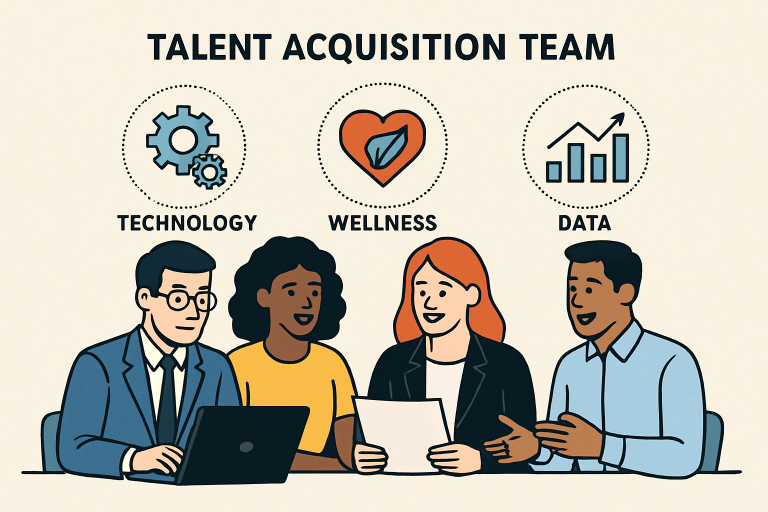
1. Prioritize Employee Wellness
Employee wellness plays a central role in both attracting and retaining talent. Programs that advocate for mental health, provide access to wellness resources, or offer flexible scheduling demonstrate a genuine commitment to employee well-being. Wellness initiatives can increase productivity and job satisfaction and reduce turnover rates. Engaged employees are more likely to recommend your organization and contribute to a positive employer brand.
2. Leverage AI and Automation
Artificial intelligence and automation simplify repetitive recruitment tasks like resume screening, interview scheduling, and candidate assessments. By freeing recruiters from manual labor, teams can focus on strategic tasks such as engaging high-potential candidates and employer branding. Major corporations have used AI-driven assessments to enhance hiring decisions and reduce bias, resulting in stronger, more diverse teams.
3. Foster Diversity and Inclusion
Diverse teams drive innovation and reflect the communities organizations serve. Implementing measurable DEI (Diversity, Equity, and Inclusion) goals expands your talent pool and supports fair, unbiased selection. Structured hiring practices, targeted sourcing, and continuous training can help organizations attract talent from a wide spectrum of backgrounds and experiences.
4. Optimize Employee Referral Programs
Employee referrals offer a valuable source of candidates who are more likely to perform well and stay longer in their roles. Effective referral programs incentivize employees to tap into their networks, often resulting in faster hiring processes and reduced onboarding costs. Consider implementing tiered or milestone-based rewards for successful referrals, aligning incentives with long-term retention.
5. Invest in Continuous Learning and Development
Encouraging ongoing professional growth within your acquisition team keeps recruiters updated on the latest trends and technologies. Providing access to seminars, conferences, and certifications ensures your staff remains at the forefront of recruitment best practices. Continuous learning empowers TA teams to adapt swiftly to changes and develop innovative solutions to emerging challenges.
6. Enhance Employer Branding
A powerful employer brand not only attracts job seekers but also builds employee loyalty. Authentic stories, transparent communication about your values, and content highlighting employee experiences can be shared on social media and your careers site. Organizations with strong employer branding see significant reductions in time-to-hire and hiring costs.
7. Utilize Data-Driven Recruiting
Leveraging data quantifies success and identifies areas for improvement at every stage of the hiring process. Metrics such as source-of-hire, time-to-fill, and quality-of-hire allow talent teams to focus their efforts on what works and pivot away from ineffective strategies. Data insights also facilitate better alignment between recruitment and business objectives, leading to long-term growth.
8. Implement Structured Interview Processes
Structured interviews, guided by standardized questions and defined evaluation criteria, minimize bias and subjectivity. Training hiring managers to use scoring rubrics ensures every candidate is assessed equally, leading to more reliable, fair, and predictive hiring outcomes. Such rigor helps organizations build more capable and diverse teams.
9. Build Cross-Functional Partnerships
Collaboration with HR, business leaders, and key stakeholders amplifies recruitment success. Cross-functional partnerships create a deeper understanding of each department’s needs, support more precise job descriptions, and enable better candidate selection. Regular communication among teams builds cohesion and ensures alignment across all levels of the organization.
10. Embrace Technology and Innovation
Keeping pace with technological advances such as recruitment management systems, video interviewing tools, and AI-driven analytics gives organizations a crucial competitive advantage. Early adoption of emerging solutions reduces time-to-hire and enhances candidate experiences. Innovating continuously helps talent acquisition teams stay agile in an ever-evolving market.
Adopting these ten strategies empowers organizations to create resilient, high-functioning talent acquisition teams. Ultimately, outperforming the competition in candidate engagement, efficiency, and retention leads to sustainable business success and a dynamic workplace culture.